HYUNDAI · HYUNDAI GRANDEUR · Cars
HYUNDAI GRANDEUR Ultra-rare
As of 2025 Q4, 19 HYUNDAI GRANDEURs remain registered in the UK — one of the rarest cars in Britain on today's roads. That's down from a peak of 36 in 2014 Q4 — only 53% of the high-water mark, a loss of about 17 cars. They're disappearing at roughly 3 a year (13.5% of what's left), a pace that would halve the survivors by around 2030 if it held — though in practice the last, most-cherished examples tend to linger far longer. In all, the HYUNDAI GRANDEUR is rarer than 75% of the 2,408 UK car models we track, putting it firmly in 2025's endangered class.
Survivors over time
How rare is it?
Genuinely rare — only 19 left on UK roads.
Rarer than 75% of the 2,408 UK car models we track.
📉 Rate of decline
Disappearing at about 3 a year (13.5% of survivors). At that pace roughly 9 would remain in 5 years, and half the current fleet is gone by around ~2030.
About the GRANDEUR
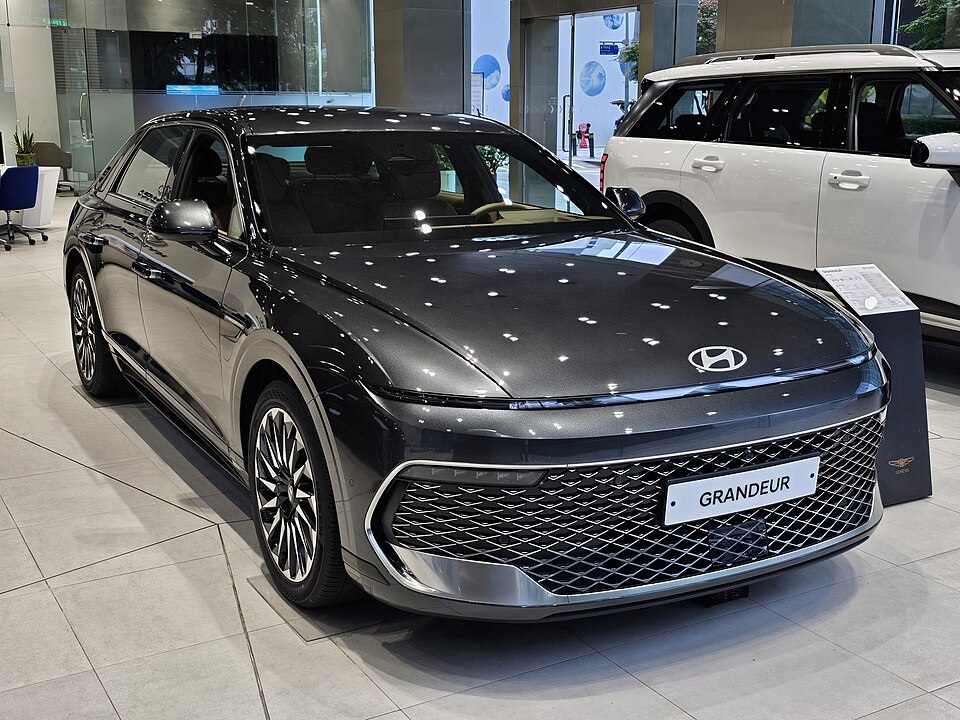
The Hyundai Grandeur (Korean: 현대 그랜저) is an executive sedan manufactured and marketed by the South Korean manufacturer Hyundai since 1986, over seven generations. From 1986 to 1996, the Grandeur was the flagship for Hyundai's South Korean range before the Hyundai Dynasty was introduced. It is marketed globally as the Hyundai Azera. As the Azera, it was the flagship of Hyundai's US and Canadian lineup until the arrival of the Genesis sedan. After the launch of the separate Genesis brand, the Grandeur/Azera resumed its place as the company's flagship. As of the 2017 model year, the Azera is no longer...
HYUNDAI GRANDEUR — questions & answers
How many HYUNDAI GRANDEUR are left in the UK?
As of 2025 Q4, 19 HYUNDAI GRANDEUR were still registered in the UK — 11 licensed and on the road, plus 8 declared SORN (off-road). The figures come from official DVLA vehicle licensing data.
Is the HYUNDAI GRANDEUR rare?
The HYUNDAI GRANDEUR is genuinely rare, with only 19 left, making it rarer than 75% of the 2,408 UK car models we track.
Is the HYUNDAI GRANDEUR increasing or decreasing?
Over the last year the number of HYUNDAI GRANDEUR on UK roads fell by 2 (9.5%). At the current rate of decline, roughly 9 would remain in 5 years.
What fuel do most HYUNDAI GRANDEUR use?
Most HYUNDAI GRANDEUR run on petrol — about 100% of those still registered.
When did the HYUNDAI GRANDEUR peak?
The HYUNDAI GRANDEUR peaked at 36 registered in 2014 Q4, and was first recorded in the data in 2014 Q3.