VOLKSWAGEN · VOLKSWAGEN PICK-UP · Cars
VOLKSWAGEN PICK-UP Ultra-rare
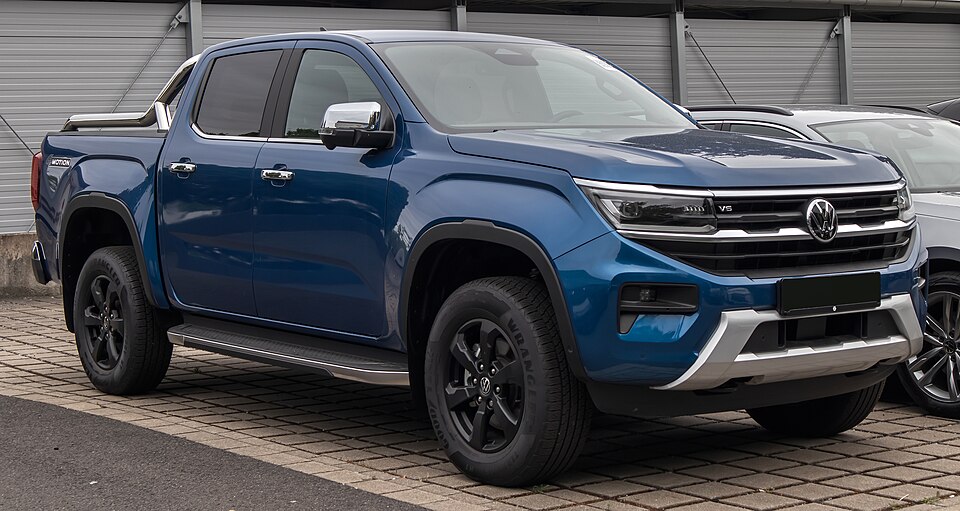
As of 2025 Q4, 4 VOLKSWAGEN PICK-UPs remain registered in the UK — one of the rarest cars in Britain on today's roads. That's down from a peak of 7 in 2016 Q3 — only 57% of the high-water mark, a loss of about 3 cars. They're disappearing at roughly 0 a year (9.4% of what's left), a pace that would halve the survivors by around 2032 if it held — though in practice the last, most-cherished examples tend to linger far longer. In all, the VOLKSWAGEN PICK-UP is rarer than 85% of the 2,408 UK car models we track, putting it firmly in 2025's endangered class.
Survivors over time
How rare is it?
Genuinely rare — only 4 left on UK roads.
Rarer than 85% of the 2,408 UK car models we track.
📉 Rate of decline
Disappearing at about 0 a year (9.4% of survivors). At that pace roughly 2 would remain in 5 years, and half the current fleet is gone by around ~2032.
About the PICK-UP
The Volkswagen Gol is a subcompact car that was manufactured by Volkswagen do Brasil from 1980 to 2023 as Volkswagen's entry-level car in the Latin American market—where it succeeded the Volkswagen Type 1 (Fusca) and the Volkswagen Brasilia. Several variants of the Gol-derived Voyage and Parati were marketed in North America as the Volkswagen Fox from 1987 to 1993. The Gol has been produced in several variants, such as three- and five-door hatchbacks, two- and four-door sedans (the Volkswagen Voyage), three- and five-door station wagons (the Volkswagen Parati), and two-door single and extra-cab...
VOLKSWAGEN PICK-UP — questions & answers
How many VOLKSWAGEN PICK-UP are left in the UK?
As of 2025 Q4, 4 VOLKSWAGEN PICK-UP were still registered in the UK — 3 licensed and on the road, plus 1 declared SORN (off-road). The figures come from official DVLA vehicle licensing data.
Is the VOLKSWAGEN PICK-UP rare?
The VOLKSWAGEN PICK-UP is genuinely rare, with only 4 left, making it rarer than 85% of the 2,408 UK car models we track.
Is the VOLKSWAGEN PICK-UP increasing or decreasing?
Over the last year the number of VOLKSWAGEN PICK-UP on UK roads fell by 1 (20.0%). At the current rate of decline, roughly 2 would remain in 5 years.
What fuel do most VOLKSWAGEN PICK-UP use?
Most VOLKSWAGEN PICK-UP run on petrol — about 100% of those still registered.
When did the VOLKSWAGEN PICK-UP peak?
The VOLKSWAGEN PICK-UP peaked at 7 registered in 2016 Q3, and was first recorded in the data in 2014 Q3.