TATA · TATA SAFARI · Cars
TATA SAFARI Rare
As of 2025 Q4, 100 TATA SAFARIs remain registered in the UK — a genuinely rare sight on today's roads. That's down from a peak of 271 in 2014 Q3 — only 37% of the high-water mark, a loss of about 171 cars. They're disappearing at roughly 7 a year (7.2% of what's left), a pace that would halve the survivors by around 2034 if it held — though in practice the last, most-cherished examples tend to linger far longer. Tellingly, 96% are declared SORN — kept off the road in garages and barns rather than driven, the signature of a car being looked after rather than used up. In all, the TATA SAFARI is rarer than 59% of the 2,408 UK car models we track.
Survivors over time
How rare is it?
Rare — fewer than 1,000 remain (100 in the latest data).
Rarer than 59% of the 2,408 UK car models we track.
📉 Rate of decline
Disappearing at about 7 a year (7.2% of survivors). At that pace roughly 69 would remain in 5 years, and half the current fleet is gone by around ~2034.
About the SAFARI
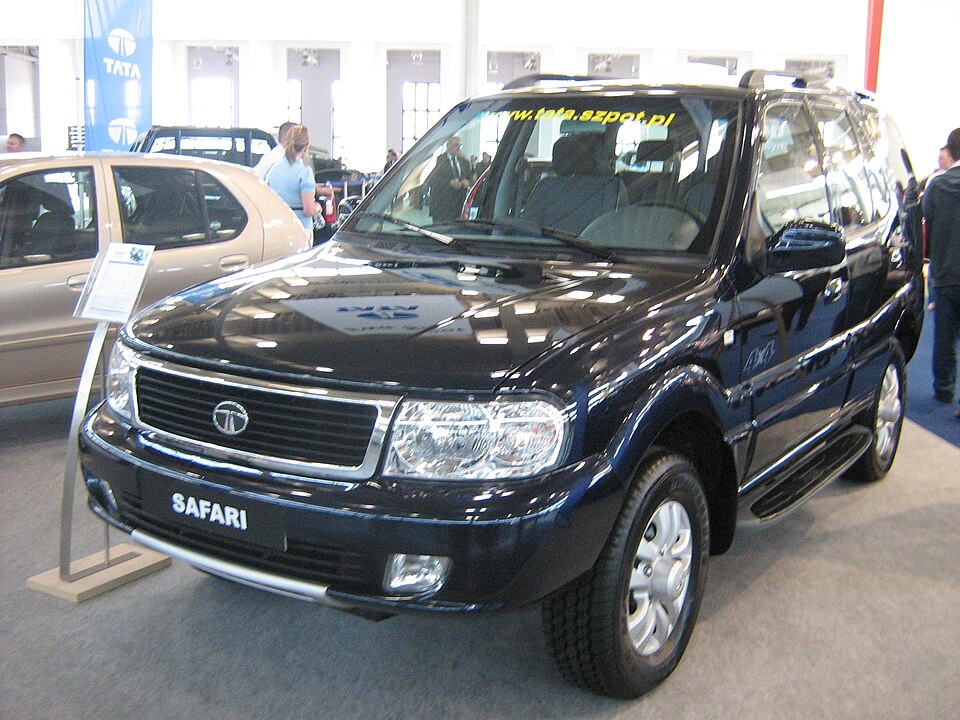
The Tata Safari is a mid-size SUV produced by the Indian automobile manufacturer Tata Motors since 1998. Safari has been designed as a seven-seater SUV with a foldable third row, roomy interior; on the market it has positioned itself as an alternative from the competitive price to other brands off-road vehicles. The second generation was introduced in 2021. Unlike the first generation, the second-generation Safari is a front-wheel-drive, monocoque crossover SUV, sharing its underpinnings with the Tata Harrier.
TATA SAFARI — questions & answers
How many TATA SAFARI are left in the UK?
As of 2025 Q4, 100 TATA SAFARI were still registered in the UK — 4 licensed and on the road, plus 96 declared SORN (off-road). The figures come from official DVLA vehicle licensing data.
Is the TATA SAFARI rare?
The TATA SAFARI is rare — fewer than 1,000 remain (100), making it rarer than 59% of the 2,408 UK car models we track.
Is the TATA SAFARI increasing or decreasing?
Over the last year the number of TATA SAFARI on UK roads fell by 6 (5.7%). At the current rate of decline, roughly 69 would remain in 5 years.
What fuel do most TATA SAFARI use?
Most TATA SAFARI run on diesel — about 100% of those still registered.
When did the TATA SAFARI peak?
The TATA SAFARI peaked at 271 registered in 2014 Q3, and was first recorded in the data in 2014 Q3.