TALBOT · TALBOT EXPRESS · Cars
TALBOT EXPRESS Ultra-rare
As of 2025 Q4, 6 TALBOT EXPRESSs remain registered in the UK — one of the rarest cars in Britain on today's roads. That's down from a peak of 9 in 2014 Q3 — only 67% of the high-water mark, a loss of about 3 cars. They're disappearing at roughly 1 a year (10.7% of what's left), a pace that would halve the survivors by around 2031 if it held — though in practice the last, most-cherished examples tend to linger far longer. In all, the TALBOT EXPRESS is rarer than 83% of the 2,408 UK car models we track, putting it firmly in 2025's endangered class.
Survivors over time
How rare is it?
Genuinely rare — only 6 left on UK roads.
Rarer than 83% of the 2,408 UK car models we track.
Fuel breakdown
📉 Rate of decline
Disappearing at about 1 a year (10.7% of survivors). At that pace roughly 3 would remain in 5 years, and half the current fleet is gone by around ~2031.
About the EXPRESS
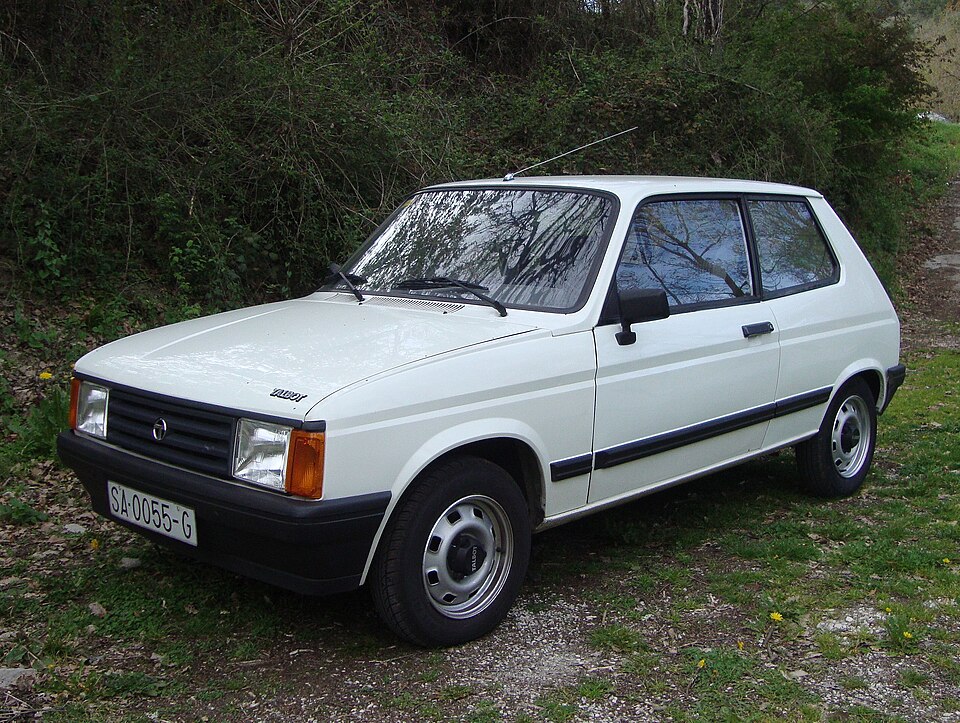
The Talbot Samba is a city car manufactured by the PSA Group in the former Simca factory in Poissy, France, and marketed under the short-lived modern-day Talbot brand from 1981 to 1986. Based on the Peugeot 104, it and the Talbot Express were the only Talbots not inherited from Chrysler Europe, engineered by PSA alone. It was also the last new Talbot car to be launched. Its demise in 1986 was effectively the end of the Talbot brand for passenger cars. Launched initially as a three-door hatchback, it was also for some time the only small car available in a factory-ordered cabrio body style, and...
TALBOT EXPRESS — questions & answers
How many TALBOT EXPRESS are left in the UK?
As of 2025 Q4, 6 TALBOT EXPRESS were still registered in the UK — 1 licensed and on the road, plus 5 declared SORN (off-road). The figures come from official DVLA vehicle licensing data.
Is the TALBOT EXPRESS rare?
The TALBOT EXPRESS is genuinely rare, with only 6 left, making it rarer than 83% of the 2,408 UK car models we track.
Is the TALBOT EXPRESS increasing or decreasing?
Over the last year the number of TALBOT EXPRESS on UK roads fell by 1 (14.3%). At the current rate of decline, roughly 3 would remain in 5 years.
What fuel do most TALBOT EXPRESS use?
Most TALBOT EXPRESS run on diesel — about 83% of those still registered, with the rest split across petrol.
When did the TALBOT EXPRESS peak?
The TALBOT EXPRESS peaked at 9 registered in 2014 Q3, and was first recorded in the data in 2014 Q3.