NISSAN · NISSAN VANETTE · Cars
NISSAN VANETTE Ultra-rare
As of 2025 Q4, 11 NISSAN VANETTEs remain registered in the UK — one of the rarest cars in Britain on today's roads. That's down from a peak of 27 in 2014 Q3 — only 41% of the high-water mark, a loss of about 16 cars. They're disappearing at roughly 0 a year (2.2% of what's left), a pace that would halve the survivors by around 2057 if it held — though in practice the last, most-cherished examples tend to linger far longer. In all, the NISSAN VANETTE is rarer than 78% of the 2,408 UK car models we track, putting it firmly in 2025's endangered class.
Survivors over time
How rare is it?
Genuinely rare — only 11 left on UK roads.
Rarer than 78% of the 2,408 UK car models we track.
Fuel breakdown
📉 Rate of decline
Disappearing at about 0 a year (2.2% of survivors). At that pace roughly 10 would remain in 5 years, and half the current fleet is gone by around ~2057.
About the VANETTE
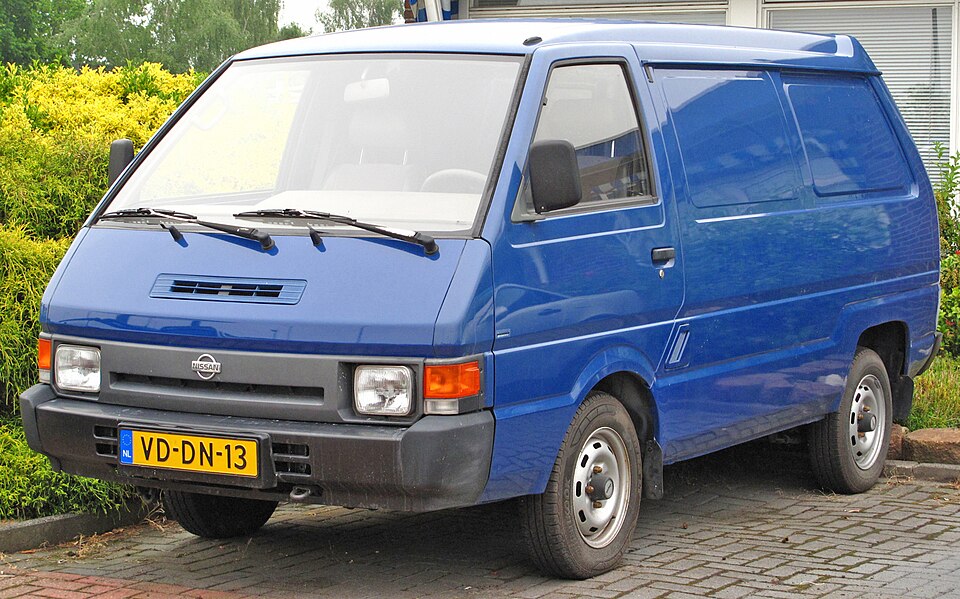
The Nissan Vanette (Japanese: 日産・バネット, Hepburn: Nissan Banetto) is a cabover van and pickup truck produced by the Japanese automaker Nissan from 1978 until 2011. The first two generations were engineered by Nissan's Aichi Manufacturing Division for private, personal ownership, with the last two generations built by Mazda, rebadged as Nissans and refocused as commercial vehicles, based on the Mazda Bongo. The van has also been sold as the Nissan Sunny-Vanette or Nissan Van. The private purchase passenger platform was replaced by the Nissan Serena in 1991, renamed Vanette in various international...
NISSAN VANETTE — questions & answers
How many NISSAN VANETTE are left in the UK?
As of 2025 Q4, 11 NISSAN VANETTE were still registered in the UK — 4 licensed and on the road, plus 7 declared SORN (off-road). The figures come from official DVLA vehicle licensing data.
Is the NISSAN VANETTE rare?
The NISSAN VANETTE is genuinely rare, with only 11 left, making it rarer than 78% of the 2,408 UK car models we track.
Is the NISSAN VANETTE increasing or decreasing?
Over the last year the number of NISSAN VANETTE on UK roads held steady. At the current rate of decline, roughly 10 would remain in 5 years.
What fuel do most NISSAN VANETTE use?
Most NISSAN VANETTE run on diesel — about 55% of those still registered, with the rest split across petrol.
When did the NISSAN VANETTE peak?
The NISSAN VANETTE peaked at 27 registered in 2014 Q3, and was first recorded in the data in 2014 Q3.